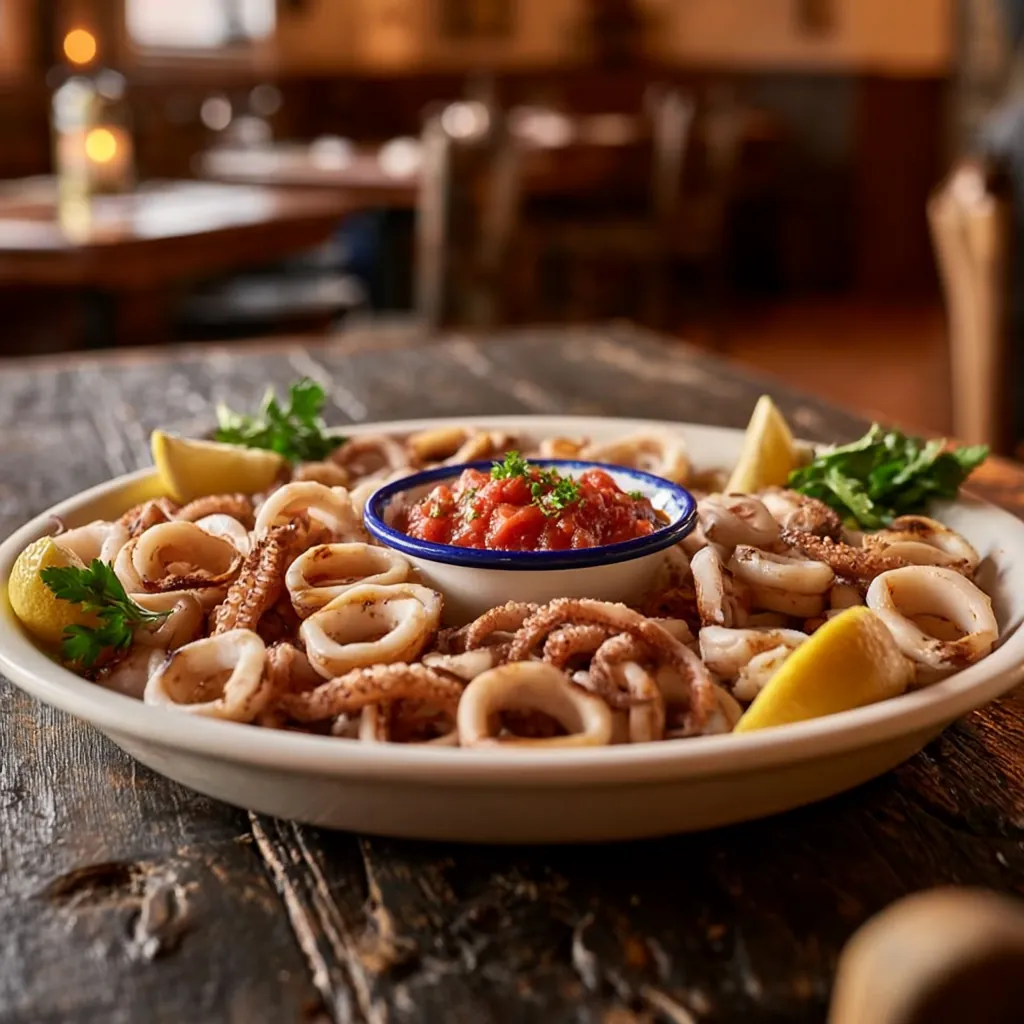
Calamariere brings tender squid, a light golden coating, fresh lemon, garlic, and herbs together in one crisp seafood dish. Although squid can seem intimidating to cook at home, this recipe keeps the process straightforward. The key comes down to preparation, dry squid, properly heated oil, and a short cooking time. When those details come together, the calamari stays tender inside while the coating turns crisp outside. Serve calamariere as a seafood appetizer, a shareable starter, or a light meal with lemon wedges and your favorite dipping sauce. Once you master the timing, this restaurant-style dish becomes surprisingly simple to make at home.
Story
Mediterranean coastal cooking has celebrated squid for generations because cooks can fry, grill, sauté, stuff, or simmer it with flavorful ingredients. Calamariere follows that practical seafood tradition and puts tender squid at the center of the plate. I especially like calamariere when I want an appetizer that feels special without requiring a long cooking session. However, squid rewards careful timing. Cook it briefly over strong heat, and it stays tender; leave it too long, and the texture quickly turns chewy. That difference makes preparation just as important as seasoning. For this calamariere recipe, a short milk soak helps prepare the squid, while flour and cornstarch create a delicate crust. Garlic powder, paprika, black pepper, and parsley add savory Mediterranean character without hiding the naturally mild seafood flavor. Fresh lemon finishes everything with brightness. Therefore, this version works beautifully for family dinners, seafood nights, parties, or weekend appetizers. Better still, the actual frying takes only a few minutes, so you can serve each batch hot and crisp.
Ingredients
Gather everything before heating the oil because calamariere cooks very quickly once frying begins. You will need:
- 1 pound cleaned squid, bodies and tentacles
- 1 cup whole milk
- 3/4 cup all-purpose flour
- 1/4 cup cornstarch
- 1 teaspoon kosher salt, divided
- 1 teaspoon garlic powder
- 1/2 teaspoon paprika
- 1/2 teaspoon freshly ground black pepper
- 1/4 teaspoon red pepper flakes, optional
- 4 cups neutral frying oil, or enough for 2 to 3 inches in the pot
- 2 tablespoons chopped fresh parsley
- 1 large lemon, cut into wedges
- 1 cup warm marinara sauce, optional, for serving
Step-by-Step Instructions
Follow the preparation and frying order closely because moisture, oil temperature, and cooking time determine the final texture. Keep your thermometer, draining rack, and serving ingredients nearby before you start frying so each batch moves quickly from coating to hot oil and then directly to the table.
Preparing the Ingredients
Rinse the cleaned squid briefly under cold water, then check the bodies and tentacles for any remaining membrane or residue. Slice the bodies crosswise into rings about 1/2 inch thick, leaving small tentacles whole. Place the squid in a bowl, pour the milk over it, cover, and refrigerate for 30 minutes. Meanwhile, combine the flour, cornstarch, 1/2 teaspoon salt, garlic powder, paprika, black pepper, and optional red pepper flakes in a shallow bowl. After soaking, drain the squid thoroughly. Next, pat every piece very dry with paper towels because excess moisture can weaken the coating and cause hot oil to splatter. Finally, set a wire rack or paper-towel-lined plate beside the stove and cut the lemon into wedges before frying.
Cooking Instructions
Pour the frying oil into a heavy pot until it reaches about 2 to 3 inches deep, while keeping the pot comfortably below half full. Heat the oil to 350°F. Toss a small batch of squid in the seasoned flour mixture until every piece gets a thin coating, then shake away excess flour. Carefully lower the coated squid into the hot oil without crowding the pot. Fry for about 60 to 90 seconds, or until the coating looks crisp and pale golden. Remove the calamariere immediately with a slotted spoon and transfer it to the prepared rack or plate. Let the oil return to 350°F before adding another batch. Continue until you cook all the squid. Sprinkle the hot calamariere with the remaining salt and chopped parsley, then serve immediately with lemon wedges and warm marinara sauce if desired.
Tips for Perfect Results
Great calamariere depends more on technique than complicated ingredients. Start with good-quality cleaned squid, remove as much surface moisture as possible, and monitor your oil temperature throughout cooking. Most importantly, prepare the entire serving setup before frying because the calamari tastes best immediately after it leaves the oil.
Common Mistakes to Avoid
Avoid putting wet squid directly into the flour because moisture creates a heavy, uneven coating instead of a light crust. Likewise, never crowd the frying pot. Too much squid lowers the oil temperature, which can leave the coating greasy rather than crisp. Another common mistake involves cooking calamariere too long. Squid needs only a brief fry at this temperature, so watch each batch rather than relying only on color. Also, shake away loose flour before frying because excess coating can fall into the oil and burn. Finally, let the oil return to 350°F between batches. Consistent temperature gives each batch a similar texture and helps the outside crisp before the squid becomes tough.
Pro Tips for Better Flavor
Season the flour rather than waiting until the end because the coating carries much of the finished flavor. Garlic powder, paprika, black pepper, and red pepper flakes create a savory base, while parsley and lemon add freshness after frying. For additional brightness, finely grate a little lemon zest over the finished calamariere immediately before serving. You can also replace part of the cornstarch with rice flour for another light, crisp coating. If you enjoy stronger Mediterranean flavors, serve the squid with garlic mayonnaise, herbed yogurt sauce, or warm marinara. Most importantly, fry in small batches and bring them directly to the table. That short trip from hot oil to serving plate preserves the contrast between the crisp exterior and tender center.
Serving and Storage
Calamariere works best as a freshly cooked appetizer, although you can also turn it into a light seafood meal with a simple salad, roasted vegetables, or crusty bread. Keep the garnishes uncomplicated so the delicate squid, crisp coating, and lemon remain the main flavors on the plate.
How to Serve
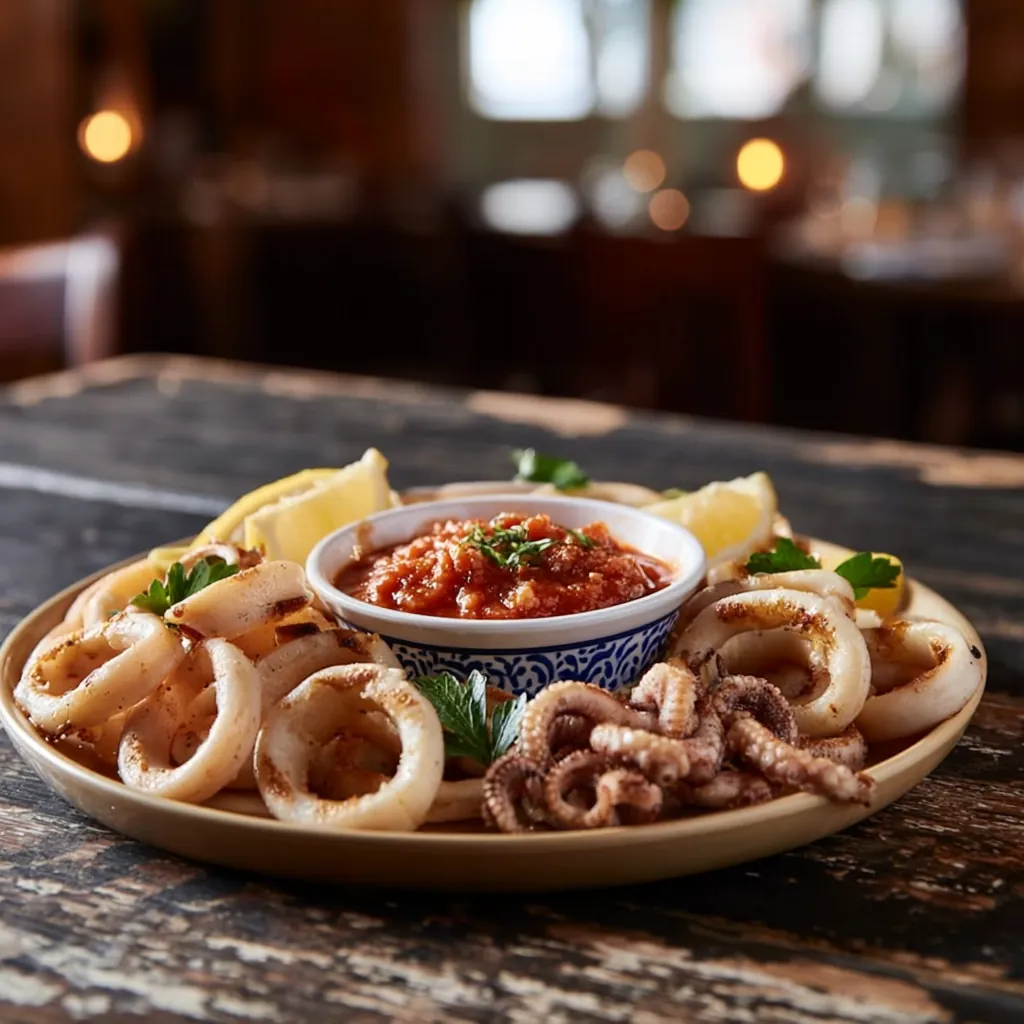
Pile the hot calamariere onto a wide platter and scatter fresh parsley over the top. Place lemon wedges around the edges so everyone can add fresh juice just before eating. For a classic appetizer presentation, serve warm marinara or garlic mayonnaise in a small bowl alongside the squid. A crisp green salad also balances the fried coating and turns the recipe into a light lunch. For a larger Mediterranean-inspired meal, pair calamariere with roasted vegetables, tomatoes, olives, or warm bread. Serve each batch as soon as possible because the crust gradually softens as it sits. A final squeeze of lemon just before eating adds acidity that complements the mild sweetness of the squid.
How to Store Leftovers
Let leftover calamariere cool, then place it in an airtight container and refrigerate it for up to two days. However, avoid sealing the squid while it remains hot because trapped steam quickly softens the coating. For the best reheated texture, arrange the leftovers in one layer in an air fryer or on a baking sheet and heat at 375°F until hot and crisp, usually about 4 to 7 minutes. Turn the pieces once if necessary. Avoid microwaving the squid when possible because the microwave can soften the crust and make the calamari chewy. Never refry leftovers for a long period. Instead, use strong heat for a short reheating time, then finish with fresh parsley and another squeeze of lemon.
Conclusion
Calamariere proves that restaurant-style seafood can come together at home with a short ingredient list and careful timing. Dry the squid well, season the coating generously, maintain hot oil, and fry each batch briefly. Those simple habits give you tender squid surrounded by a crisp, flavorful crust. Lemon, parsley, and a favorite dipping sauce complete the dish without overwhelming its delicate seafood character. Whether you serve it before dinner or make it the centerpiece of a casual seafood meal, this calamariere recipe offers an approachable way to cook squid with confidence. Try it while it is piping hot, and you may find yourself adding homemade calamariere to your regular appetizer rotation.
Frequently Asked Questions
These quick answers cover the most important questions home cooks often have when preparing calamariere, from keeping squid tender to choosing the right frying temperature. Use them alongside the recipe instructions whenever you need a quick reminder before your next batch.
How Do I Keep Calamariere From Becoming Rubbery?
Cook the squid quickly and avoid extending the frying time while waiting for a darker crust. At 350°F, thin squid rings generally need only about 60 to 90 seconds to become crisp and lightly golden. Fry small batches so the oil stays hot, then remove each batch promptly. Thick pieces may need slightly more time, so cut the bodies into reasonably even rings before cooking. The milk soak also gives you a gentle preparation step before frying, but careful cooking time matters most. Once the calamariere looks crisp and pale golden, transfer it from the oil immediately and serve it while hot.
Can I Make Calamariere Without Deep-Frying?
Yes. You can grill or quickly sauté prepared squid when you prefer a different texture, although you will lose the characteristic flour-coated crunch of this recipe. For grilling, coat cleaned and dried squid lightly with olive oil, garlic, lemon, salt, and herbs, then cook it briefly over high heat. For sautéing, heat a skillet until very hot, add a small amount of oil, and cook the squid quickly in batches. Both approaches suit the mild flavor of squid particularly well. However, when you want the crisp appetizer described in this recipe, frying provides the most reliable contrast between a crunchy exterior and tender center.
What Oil Temperature Works Best for Calamariere?
Aim for about 350°F throughout frying. That temperature lets the coating crisp quickly while keeping the cooking period short. Use a kitchen thermometer for the easiest control, especially if you have never fried squid before. After adding a batch, the temperature will naturally fall slightly, so avoid adding too much calamariere at once. Let the oil recover before frying the next batch. If the temperature drops too far, the coating can absorb additional oil and become heavy. If the oil runs excessively hot, the exterior can brown before you achieve the texture you want. Consistent heat and small batches give you much better results.

Calamariere
- Total Time: 50 minutes
- Yield: 4 servings
Description
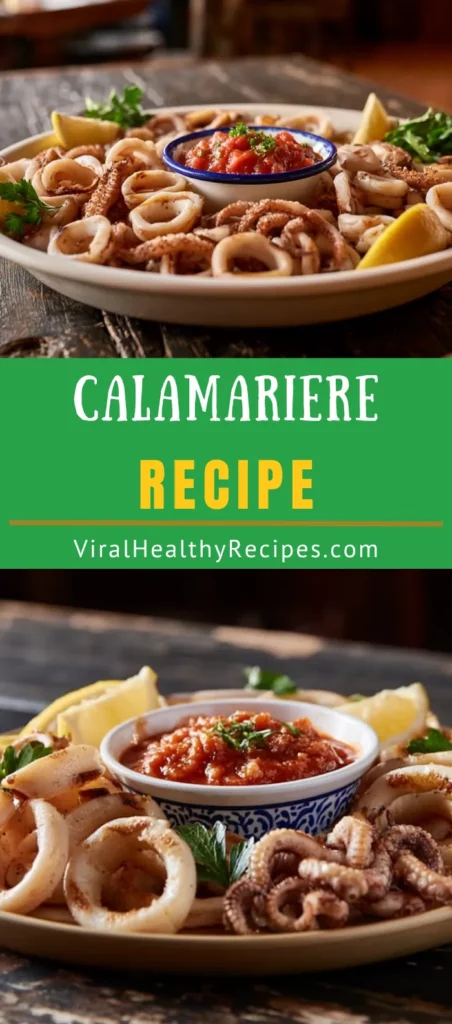
Crispy calamariere features tender squid coated with seasoned flour and cornstarch, quickly fried until pale golden, then finished with fresh parsley and lemon.
Ingredients
- 1 pound cleaned squid, bodies and tentacles
- 1 cup whole milk
- 3/4 cup all-purpose flour
- 1/4 cup cornstarch
- 1 teaspoon kosher salt, divided
- 1 teaspoon garlic powder
- 1/2 teaspoon paprika
- 1/2 teaspoon freshly ground black pepper
- 1/4 teaspoon red pepper flakes, optional
- 4 cups neutral frying oil, or enough for 2 to 3 inches in the pot
- 2 tablespoons chopped fresh parsley
- 1 large lemon, cut into wedges
- 1 cup warm marinara sauce, optional, for serving
Instructions
- Rinse the cleaned squid briefly under cold water and remove any remaining membrane or residue.
- Slice the squid bodies crosswise into 1/2-inch rings and leave small tentacles whole.
- Place the squid in a bowl, cover with the milk, and refrigerate for 30 minutes.
- Combine the flour, cornstarch, 1/2 teaspoon salt, garlic powder, paprika, black pepper, and optional red pepper flakes in a shallow bowl.
- Drain the squid thoroughly and pat every piece very dry with paper towels.
- Pour the frying oil into a heavy pot to a depth of about 2 to 3 inches and heat to 350°F.
- Coat a small batch of squid in the seasoned flour mixture and shake away the excess.
- Carefully lower the squid into the hot oil without crowding the pot.
- Fry for 60 to 90 seconds, or until crisp and pale golden.
- Remove with a slotted spoon and transfer to a wire rack or paper-towel-lined plate.
- Return the oil to 350°F and repeat with the remaining squid.
- Season the hot calamariere with the remaining salt and chopped parsley.
- Serve immediately with lemon wedges and warm marinara sauce if desired.
Notes
- Pat the squid thoroughly dry before coating for a lighter, crisper crust.
- Keep the frying oil near 350°F and let it recover between batches.
- Do not crowd the pot because overcrowding lowers the oil temperature.
- Avoid overcooking the squid or it can become chewy.
- Serve immediately for the crispest texture.
- Nutrition values are estimated per serving.
- Prep Time: 40 minutes
- Cook Time: 10 minutes
- Category: Appetizer
- Method: Frying
- Cuisine: Mediterranean
Nutrition
- Serving Size: 1 serving
- Calories: 310
- Sugar: 3
- Sodium: 510
- Fat: 14
- Saturated Fat: 2
- Unsaturated Fat: 11
- Trans Fat: 0
- Carbohydrates: 27
- Fiber: 1
- Protein: 20
- Cholesterol: 265